NATURE TOURS
Ethiopia is well endowed with a wide variety of experiences in natural spheres to explore, enjoys an amazing scenic beauty and boasts some of the world’s most breathtaking scenery with diverse landscape, fauna & flora, and welcoming people. The country is truly a tourist paradise- beautiful, secretive, mysterious and extraordinary... It is rich in mountains, rivers, lakes, wildlife, plants, birds, water falls including the famous Blue Nile Falls, and many more. The country has thirteen national parks and 36 game reserve areas. For instance, the Semien and Bale mountains are the most spectacular and magnificent touristic sites.
SIMIEN MOUNTAINS NATIONAL PARK
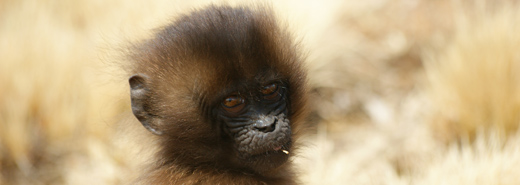
The Simien Mountains National Park was officially established in 1969 with the objective of preserving its unique Afro-alpine ecosystems and high number of endemic species of birds and wildlife that include the Ethiopian wolf, gelada baboon and walia ibex. Dubbed as the "Roof of Africa," Ethiopia has the highest elevated portion of landmass on the continent. The Simien Mountains are part of this landmass with unparalleled scenery. It was declared as a World Heritage site by UNESO in 1978. The region includes many summits above 4,000 mts and culminates in the highest point in Ethiopia and fourth highest peak in Africa, Mount Ras Dashen (4,620 mts.) Its dramatic topography is the result of the erosion of basalt lavas that have been calculated to be nearly 3,000 mts thick. It is an ideal place for nature lovers and trekkers. The rainy season runs from June to September so travelling can be difficult during this period. November and December are the coldest months when the temperature is likely to go below freezing.
Quote taken from Rosita Forbes, 1925 "From Red Sea to Blue Nile - A thousand Miles of Ethiopia."
"The most marvelous of all Abyssinian landscapes opened before us, as we looked across a gorge that was clouded amethyst to the peaks of Simien. A Thousand, Thousand years ago, when the old god reigned in Ethiopia, they must have played chess with those stupendous crags, for we saw bishops' miters cut in lapis lazuli, castles with the ruby of approaching sunset on their turrets, an emerald knight where the forest crept up on to the rock and, far away, a king, crowned with sapphire and guarded by a row of pawns." 
SOFOMAR CAVE
This vast network of limestone caverns, reputedly the largest in Africa, lies 100kms east of the Bale range at an elevation of 1,300m. It has been carved by the WEYIB River, which descends from the Bale highlands to the flat, arid plains that stretch towards the Somali border. It is regularly visited by bird watchers because it is one of two sites where it’s reasonably easy to spot Salvadori’s Serin, a threatened and localized dry country endemic with a bold yellow throat. The SERIN is often elusive, but even if you miss it, the area holds several other good acacia scrub species, notably orange-bellied parrot, blue-naped moosebird, Abyssinian scimitarbill sulphur-breasted bush shrike, small grey flycatcher, browen-tailed chat, brown-tailed apalis, bristle-crowned and Fischer’r starling and Somali tit.
BALE MOUNTAIN NATIONAL PARK
The Bale Mountains possess many habitats rich in birds, particularly the Harenna Forest which has been little studied. More than one hundred and sixty species of birds are known from the Park area, but their number is certain to be added to considerably in the future. Since the Bale Mountains are isolated from other similar habitats in Africa by low and dry areas, many endemic species are found. At least twenty-three species of birds are known to be endemic to Ethiopia. No less than fourteen of these species are known to occur in the Bale Mountains National Park area, and several are easily seen every day.
Amongst the endemics, the more commonly seen only are mentioned here. The Blue-winged Goose and Rouget's Rail are found near any water be it stream or high mountain lake, at all altitudes. The noisy Wattled Ibis occurs in most muddy places busily probing for food with its long curved bill. Large numbers roost on high, cliffs in the mountains every night. The beautiful Spot-breasted Plover is found in large numbers in the wet season on the Sanetti Plateau, and large flocks of the White-collared Pigeon feed on the ground here at the same period. The weird-Iooking Thick-billed Raven is a denizen of most villages, and usually finds your camp at any altitude. The colourful little green and red Black-winged Love-birds are seen in large numbers in the forest areas, while the larger Yellow-fronted Parrot is less often seen in the same habitat. The strident ringing calls of the shy Abyssinian Catbird betray its presence in forest. Close observation in the Gaysay grasslands and beside the main road will reveal the Abyssinian Long claw -a drab little bird, but with a smart yellow bib. The high plateau is characterized by large flocks of the little black and yellow Black-headed Siskin.
The Bale Mountains, rich in streams and little Alpine lakes, provide food and security for unusual water birds such as the Ruddy Shelduck and the tall elegant Wattled Crane. Many European ducks and waders pass the dry season in the mountains, before returning to Europe, as do several birds of prey such as the Steppe Eagle and Kestrel. Probably the most common and friendly bird at all altitudes is the little drab but cheery Mountain Chat - puffed up like a round feathered ball in the icy dawn, hopping from tussock to tussock as he investigates you. One of the largest and most spectacular birds is the Lammergeier also called the Bearded Vulture or Bone-breaker. This enormous bird with its over-two-metre wingspan is often seen soaring alone over suitably high cliffs and rock outcrops, while splintered bone fragments, even on the top of Tullu Deemtu and Mt. Batu tell of its presence. Wherever you go in Bale there are birds to watch, and generally unusual ones to add considerably to your experience of this wonderful area.
Simien Trekking
Duration: 10days 9night Tour Code: UET – 1001
Day1. Arrival in Addis Ababa & transfer to hotel. Overnight hotel
Day2. Fly Addis To Gondar & Visit The Sites. Overnight Hotel
Day3. Drive Gondar To Simien Mountain National Park (SMNP) Sankaber Campsite. Overnight Camping At Sankaber
Day4. Trek Sankaber To Gich Camp Site. Overnight Camping At Gich
Day5. Trek Gich To Chennek Campsite. Overnight Camping At Chennek
Day6. Trek Chennek To Buhait Ras. Overnight Camping At Chennek
Day7. Drive Chennek To Gondar. Overnight hotel
Day8. Drive Gondar To Bahirdar. Overnight Hotel
Day9. Visit Bahirdar. Overnight Hotel
Day10. Fly Bahirdar Back To Addis
Bale Trekking
Duration: 12days 11night Tour Code: 1002
Day1. Arrive in Addis Ababa and transfer to the hotel. Overnight hotel
Day2. Full day city tour of Addis Ababa. Overnight hotel
Day3. Morning drive Addis to Langano. Overnight Lodge
Day4. Morning drive Langano to Dodolla. Then proceed to Changiti. Overnight Lodge
Day5. Afternoon drive Changiti to Dinsho. Overnight Camping/Lodge
Day6. Make an Excursion Dinsho - Gessey Valley - Dinsho. Overnight Camping/Lodge
Day7. Dinsho - Wolla Valleys. Overnight Camping
Day8. Wolla Valleys - Wasama Valley. Overnight Camping
Day9. Wasama Valley – Batu - Garba Guracha Lake. Overnight Camping
Day10. Garba Guracha Lake - Goba. Overnight Hotel
Day11. Drive Goba to Wondogenet. Overnight Hotel
Day12. Drive back to Addis Ababa & evening departure